
What we do
Full-service assurance, tax, and advisory.
From statutory audit to strategic advisory, our engagements are built on rigor, ethics, and a genuine understanding of your business.
Audit & Assurance
- Financial statements audit
- Internal audit
- Review of historical financial statements
- Review of prospective financial statements
Tax Services
- Tax assessment
- Tax compliance health check
- Tax due diligence
- Tax opinions and rulings
- Tax planning and structuring
- Estate and donor’s tax compliance
Accounting Services
- Bookkeeping
- Compilation of financial statements
- Account reconciliations
- Internal accounting
Advisory & Business Consultancy
- Business policy making
- Financial due diligence
- Risk management
- Strategic management
Corporate Services
- Business registration
- Corporate structuring
- Corporate secretarial
- Payroll processing and compliance
Other Services
- Agreed-upon procedures
- Company profiling & loan application assistance
- Estate planning · Retirement planning and funding
- Contract review · Collection services
- Real estate services and other allied services
Who we serve
Industries we serve.
The reporting framework, the controls, and the regulator differ by sector. Our engagements cover twelve.
Beyond Tacloban City
Engagements run from wherever you are.
Clients elsewhere in Eastern Visayas, in Metro Manila and in other regions work with us without travelling to our office.
Documents turned over online
Records, schedules and supporting documents are exchanged through shared online folders, and reports are delivered the same way.
Meetings by video call
Planning, status and closing meetings are held by video call. Visits are scheduled where the work requires them, such as an inventory count.
Electronic filing
Returns and reports are filed through the online systems of the BIR, the SEC and the other agencies that accept them.
Our Partners
Led by credentialed professionals.
Four partners with national distinctions, international practice, and deep roots in the academe.


Placed 2nd in the May 2018 CPA licensure examination. Trained in assurance and taxation at one of the largest professional services firms in the world before returning to Region VIII, and has since audited MSMEs through to large corporations. Assists taxpayers through BIR audits and assessments. Teaches audit, assurance, and taxation, and authored a CPA reviewer book on auditing.
View full profile →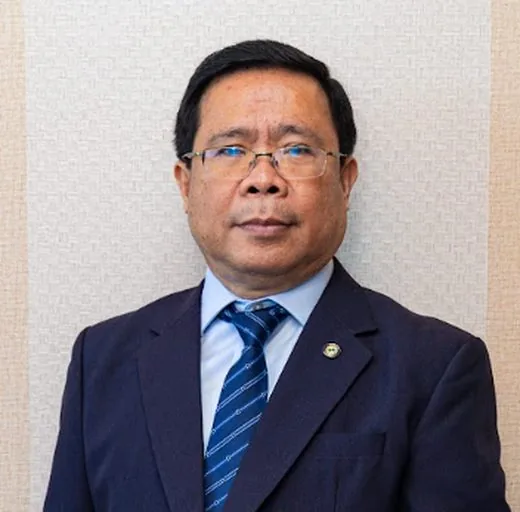
Audit and Professional Practice Director at one of the world’s Top 4 professional services firms, serving in its London, New York, and Philippine offices. Sat three consecutive terms on the Audit and Assurance Standards Council, served as National President of PICPA for FY 22-23, and sits on the council of the ASEAN Federation of Accountants. Led Saint Paul School of Professional Studies as President for more than a decade.
View full profile →
Placed 1st in the May 2018 CPA licensure examination and 10th in the December 2023 Bar. Practice centres on tax compliance and health checks, assistance with tax audits, corporate structuring, and tariff and customs compliance. Began his career as a risk and compliance officer, internal auditor, and data privacy officer. Lectures on taxation and commercial law and reviews for the CPA board examinations.
View full profile →
More than half a decade in the public practice of accountancy, auditing MSMEs and large corporations across retail and trade, educational institutions, non-profits, importation, and services. Began as an audit associate at a Manila firm. Works in full-cycle accounting and financial reporting with variance and ratio analysis. School accountant and part-time lecturer at SPSPS, and treasurer of PICPA–Tacloban Chapter.
View full profile →Insights
What falls due this month.
The next filing and payment deadlines we are tracking. Open the calendar for the full year.
Get in touch
Let’s talk about your business.
Tell us what you need — audit, tax, bookkeeping, or advisory — and our team will get back to you.
2nd Floor, Rubber Tree Building, Brgy. 77, 611 BLISS – Fatima Diversion Road, Tacloban City, Philippines 6500
Suite 302, F. Mendoza Complex, Sto. Niño St., Brgy. 28, Tacloban City 6500
0995 398 9482
info@aaccocpas.com
Message us on Messenger
Insights
AAC Tax Code.
The National Internal Revenue Code of 1997 as it currently stands — consolidated by the firm to carry the TRAIN Law, the CREATE Act, the Ease of Paying Taxes Act, the VAT on Digital Services Act, CREATE MORE, the CMEPA and the amendatory laws in force to 1 August 2026, with a footnote at every provision naming the law that changed it.
The printed edition runs to 240 pages and carries the same text, footnotes and references as the browser below. Every section here shows the page it sits on in that PDF, so a citation taken from the screen matches the one taken from the book.
TITLE IV — VALUE-ADDED TAX › CHAPTER I. IMPOSITION OF TAX
SEC. 106. Value-added Tax on Sale of Goods or Properties
(A) Rate and Base of Tax. — There shall be levied, assessed and collected on every sale, barter or exchange of goods or properties, a value-added tax equivalent to twelve percent (12%) of the gross sales of the goods or properties sold, bartered or exchanged, such tax to be paid by the seller or transferor.
(1) The term ‘goods or properties’ shall mean all tangible and intangible objects which are capable of pecuniary estimation and shall include:
(a) Real properties held primarily for sale to customers or held for lease in the ordinary course of trade or business;
(b) The right or the privilege to use patent, copyright, design or model, plan, secret formula or process, goodwill, trademark, trade brand or other like property or right;
(c) The right or the privilege to use in the Philippines of any industrial, commercial or scientific equipment;
(d) The right or the privilege to use motion picture films, films, tapes and discs; and
(e) Radio, television, satellite transmission and cable television time.
For the purposes of this Section, the term ‘gross sales’ means the total amount of money or its equivalent value in money which the purchaser pays or is obligated to pay to the seller in consideration of the sale, barter or exchange of the goods or properties, excluding the value-added tax. The excise tax, if any, on such goods or properties shall form part of the gross sales.
(2) The following sales by VAT-registered persons shall be subject to zero percent (0%) rate:132
(a) Export Sales.133 — The term ‘export sales’ means:
(1) The sale and actual shipment of goods from the Philippines to a foreign country, irrespective of any shipping arrangement that may be agreed upon which may influence or determine the transfer of ownership of the goods so exported and paid for in acceptable foreign currency or its equivalent in goods or services, and accounted for in accordance with the rules and regulations of the Bangko Sentral ng Pilipinas (BSP);
(2) Sale of raw materials or packaging materials to a non-resident buyer for delivery to a resident local export-oriented enterprise to be used in manufacturing, processing, packing or repacking in the Philippines of the said buyer’s goods and paid for in acceptable foreign currency and accounted for in accordance with the rules and regulations of the Bangko Sentral ng Pilipinas (BSP);
(3) Sale of goods to an export-oriented enterprise whose export sales is at least seventy percent (70%) of the total annual production of the preceding taxable year: Provided, That such goods are directly attributable to the export activity of the export-oriented enterprise: Provided, further, That the Export Marketing Bureau of the Department of Trade and Industry (DTI) shall determine compliance with the aforementioned threshold. Any export-oriented enterprise that fails to meet the threshold shall be disqualified from availing of VAT zero-rating on local purchases in the immediately succeeding year: Provided, finally, That input tax otherwise due on VAT zero-rated local purchases attributable to VAT-exempt sales shall be paid and deductible from the gross income of the taxpayer. For this purpose, ‘directly attributable’ shall refer to goods and services that are incidental to and reasonably necessary for the export activity of the export-oriented enterprise, including janitorial, security, financial, consultancy, marketing and promotion services, and services rendered for administrative operations such as human resources, legal, and accounting;
(4) The sale of goods, supplies, equipment, and fuel to persons engaged in international shipping or international air transport operations: Provided, That the goods, supplies, equipment, and fuel shall be used for international shipping or air transport operations; and
(5) Sales to bonded manufacturing warehouses of export-oriented enterprises.
The Department of Finance (DOF) shall establish a VAT refund center in the Bureau of Internal Revenue (BIR) and in the Bureau of Customs (BOC) that will handle the electronic processing and granting of cash refunds of creditable input tax.
An amount equivalent to five percent (5%) of the total VAT collection of the BIR and the BOC from the immediately preceding year shall be automatically appropriated annually and shall be treated as a special account in the General Fund or as trust receipts for the purpose of funding claims for VAT refund: Provided, That any unused fund, at the end of the year shall revert to the General Fund: Provided, further, That the BIR and the BOC shall be required to submit to the Congressional Oversight Committee on the Comprehensive
Tax Reform Program (COCCTRP) a quarterly report of all pending claims for refund and any unused fund.
(c) Sales to persons or entities whose exemption under special laws or international agreements to which the Philippines is a signatory effectively subjects such sales to zero rate.
(d) Those sales subject to zero percent (0%) VAT under special laws.
(B) Transactions Deemed Sale. — The following transactions shall be deemed sale:
(1) Transfer, use or consumption not in the course of business of goods or properties originally intended for sale or for use in the course of business;
(2) Distribution or transfer to:
(a) Shareholders or investors as share in the profits of the VAT-registered persons; or
(b) Creditors in payment of debt;
(3) Consignment of goods if actual sale is not made within sixty (60) days following the date such goods were consigned; and
(4) Retirement from or cessation of business with respect to inventories of taxable goods existing as of such retirement or cessation.
(C) Changes in or Cessation of Status of a VAT registered Person. — The tax imposed in Subsection (A) of this Section shall also apply to goods disposed of or existing as of a certain date if under circumstances to be prescribed in rules and regulations to be promulgated by the Secretary of Finance, upon recommendation of the Commissioner, the status of a person as a VAT-registered person changes or is terminated.
(D) Sales Returns, Allowances and Sales Discounts. — The value of goods or properties sold and subsequently returned or for which allowances were granted by a VAT-registered person may be deducted from the gross sales for the quarter in which a refund is made or a credit memorandum or refund is issued. Sales discount granted and indicated in the invoice at the time of sale and the grant of which does not depend upon the happening of a future event may be excluded from the gross sales within the same quarter it was given.
(E) Authority of the Commissioner to Determine the Appropriate Tax Base. — The Commissioner shall, by rules and regulations prescribed by the Secretary of Finance, determine the appropriate tax base in cases where a transaction is deemed a sale, barter or exchange of goods or properties under Subsection (B) hereof, or where the gross sales is unreasonably lower than the actual market value.
Amendment notes
- sec. 6 of Republic Act No. 11590, approved 22 September 2021, zero-rated sales of goods to offshore gaming licensees. Republic Act No. 11590 was repealed in its entirety by sec. 18 of Republic Act No. 12312, the Anti-POGO Act of 2025, approved 23 October 2025, which bans and criminalises offshore gaming operations. The amendments it introduced are accordingly spent. Republic Act No. 12312 contains no clause reviving the text that preceded them.
- Subsections (A), (D) and (E) as amended by sec. 16 of the Ease of Paying Taxes Act (Republic Act No. 11976), approved 5 January 2024, which replaced “gross selling price or gross value in money” as the tax base with “gross sales” and substituted the corresponding definition. Paragraph (A)(2) as further amended by sec. 6 of the CREATE MORE Act (Republic Act No. 12066), approved 8 November 2024: the export sales items were renumbered, the seventy percent (70%) export threshold and the “directly attributable” test were introduced, sales to bonded manufacturing warehouses of export-oriented enterprises were added, the item on sales considered export sales under Executive Order No. 226 was dropped, and the proviso subjecting certain export sales to the twelve percent (12%) value-added tax upon the establishment of an enhanced VAT refund system was removed. Item (d) is new. The lettering of the items in paragraph (A)(2) follows the enrolled text of the amendment, in which the item on sales to persons or entities exempt under special laws or international agreements is designated (c).
- TRAIN Law, sec. 31 — amended. Subsection (b), on foreign currency denominated sales, was withdrawn.
- TRAIN Law, sec. 31 — amended. Sales of gold to the Bangko Sentral ng Pilipinas were taken out of this Subsection and made exempt under Section 109.